

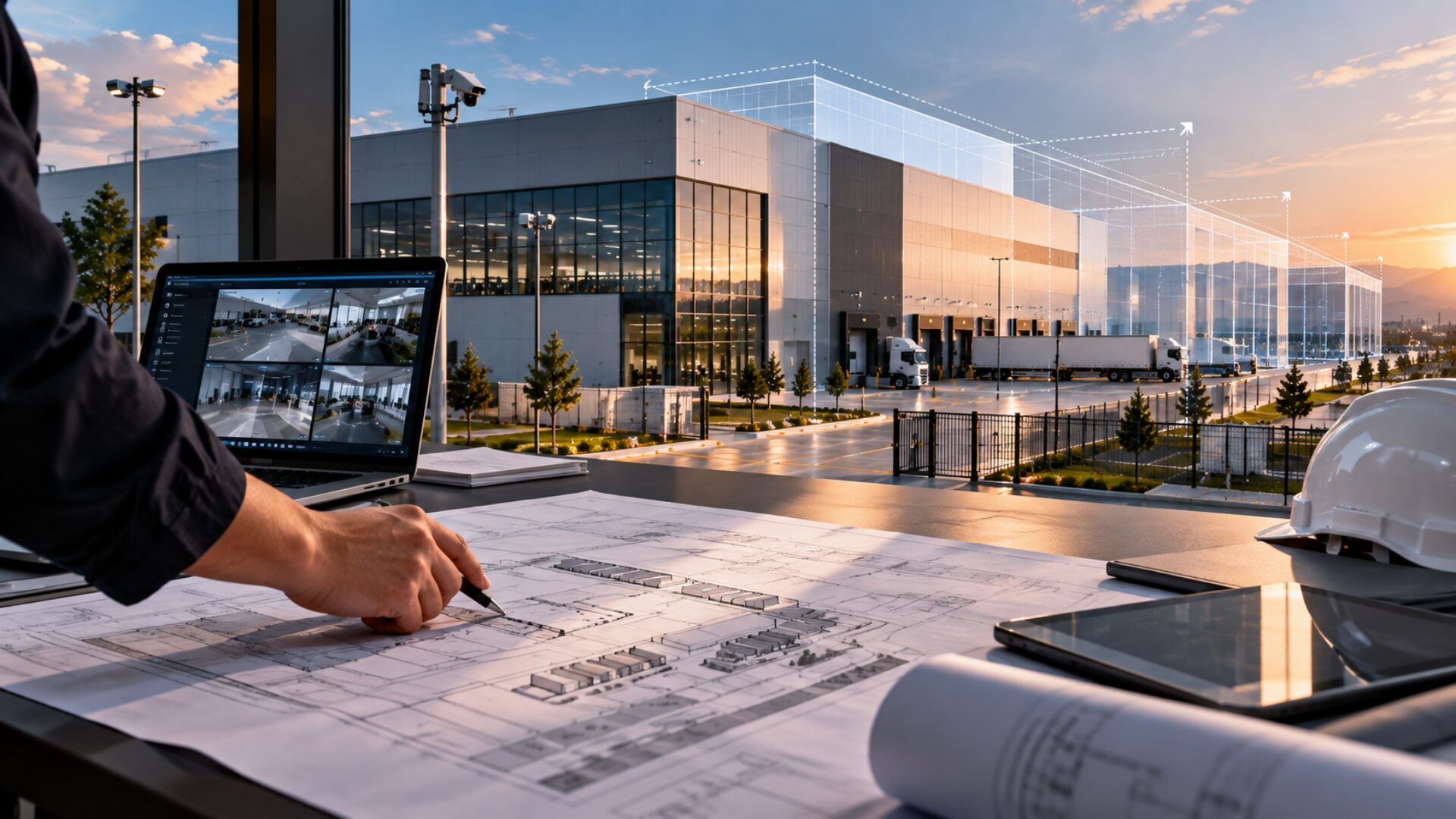
Designing Today for Tomorrow’s Operations: The Importance of a Scalable Architecture
A security infrastructure may fully meet an organization’s needs and eventually become insufficient. Companies grow, add new areas, increase their number of users, open new facilities, and adopt new technologies. For this reason, the ability to evolve should be considered part of the design from the beginning.
Scalability does not mean installing higher-capacity equipment without a specific need. It means building an architecture that can be expanded in an orderly way when the operation requires it. To achieve this, it is first necessary to understand what may change and which elements are likely to experience the greatest growth.
The number of devices is one of the most obvious factors. An expansion may mean more cameras, readers, sensors, or monitoring points. However, every additional device also creates new requirements for networking, storage, power, processing, and management.
Communication infrastructure should be included in this planning. A network that operates effectively with a certain number of devices may require adjustments as the operation grows. Designing with growth in mind helps prevent an expansion from becoming a technical limitation.
Integration must also be scalable. An organization may begin with video surveillance and later add access control, detection systems, analytics, or other technologies. A flexible architecture makes it easier to incorporate these new solutions without having to completely rebuild the existing infrastructure.
Growth can also be geographic. A company may begin with a single facility and later operate in different cities, industrial parks, or countries. In these environments, communication and management across multiple locations become increasingly important.
Managing multiple facilities also raises questions about where data should be processed and managed. Some functions may require centralized coordination, while others need to remain available locally. These decisions should be part of the architecture and respond to the needs of each operation.
It is also important to find a balance between anticipated growth and investment. Designing a solution that is too large can create unused capacity, while an infrastructure that is too limited may require premature modifications. Planning should aim for an architecture that meets current needs while allowing reasonable expansion.
Maintenance and documentation become increasingly important as an infrastructure grows. The more devices, systems, and locations are involved, the more important it becomes to maintain updated information that supports management, technical support, and future expansions.
Scalability also means considering technological evolution. The tools available today can change rapidly, and an organization may need to incorporate new capabilities later. A flexible architecture makes it possible to evaluate and integrate new solutions without necessarily replacing every existing component.
Designing for growth does not mean trying to predict exactly what an organization will look like ten years from now. It means identifying reasonable scenarios and making decisions that allow the organization to respond without compromising current operations.
A scalable infrastructure should ultimately support the organization’s growth and adapt to its changing needs. The goal is not to build the largest solution, but to build an architecture with room to evolve.
Leave a Reply