
C-TPAT and OEA: Why Security Should Be Part of the Engineering Process
For a company involved in an international supply chain, facility security can have implications that go far beyond protecting physical assets. When requirements associated with programs such as C-TPAT or OEA apply, security should be addressed in a structured way and with consideration for the different elements that make up the operation.
C-TPAT, administered by U.S. Customs and Border Protection, is designed to have participants work toward protecting the supply chain, identifying security gaps, and implementing specific security measures and best practices. CBP states that companies must develop a supply chain security profile and that a risk assessment should already have been conducted as part of that process.
In Mexico, the OEA program covers several security areas, including supply chain security planning, physical security, physical access controls, process security, vehicle and container security, information security, security training, and incident management. This illustrates why a security strategy cannot be reduced to a single system or device.
Risk assessment is an important starting point. Before determining which technologies should be implemented, it is necessary to understand what needs to be protected, which threats are relevant, and where vulnerabilities exist. This assessment allows security measures to respond to the actual characteristics of the facility.
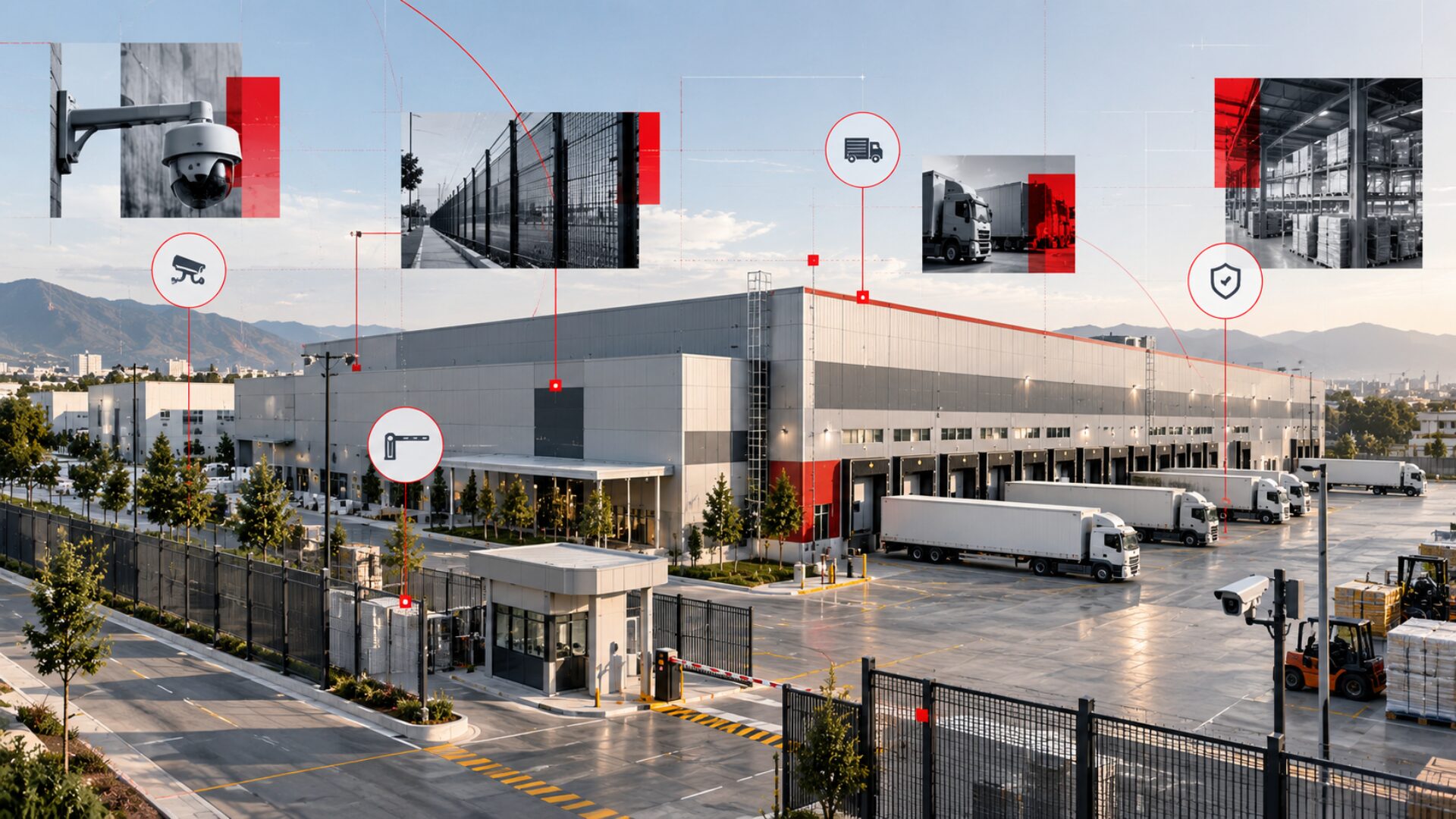
Physical security is one of the elements that must be considered. Perimeters, fences, access points, yards, storage areas, and loading zones may present different risks. C-TPAT criteria include measures related to physical security and access control, including the identification of employees, visitors, and vendors at entry points.
Access control should therefore be part of a broader strategy. It is not simply about preventing unauthorized entry, but about establishing mechanisms to identify who enters, control which areas they can access, and maintain appropriate access records.
Video surveillance can provide another layer of information. Depending on the design, cameras can help monitor access points, perimeters, yards, and other critical areas. Their value, however, depends on how effectively they are integrated into the security architecture and how the information they generate is used.
Communication infrastructure also plays an important role. Video surveillance, access control, and other devices require appropriate networks and communication systems to exchange information. In industrial projects, this may involve networks, fiber optics, links, and other infrastructure components.
Security does not end once the infrastructure has been installed. Operations change, facilities expand, and processes may be modified. Maintaining systems, reviewing their performance, and updating protection measures help ensure that the infrastructure continues to respond to operational conditions.
That is why, when discussing C-TPAT and OEA, technology should be understood as part of a broader strategy. Risk assessment, engineering, processes, and security systems need to work together to protect the operation and address its requirements.
Leave a Reply