

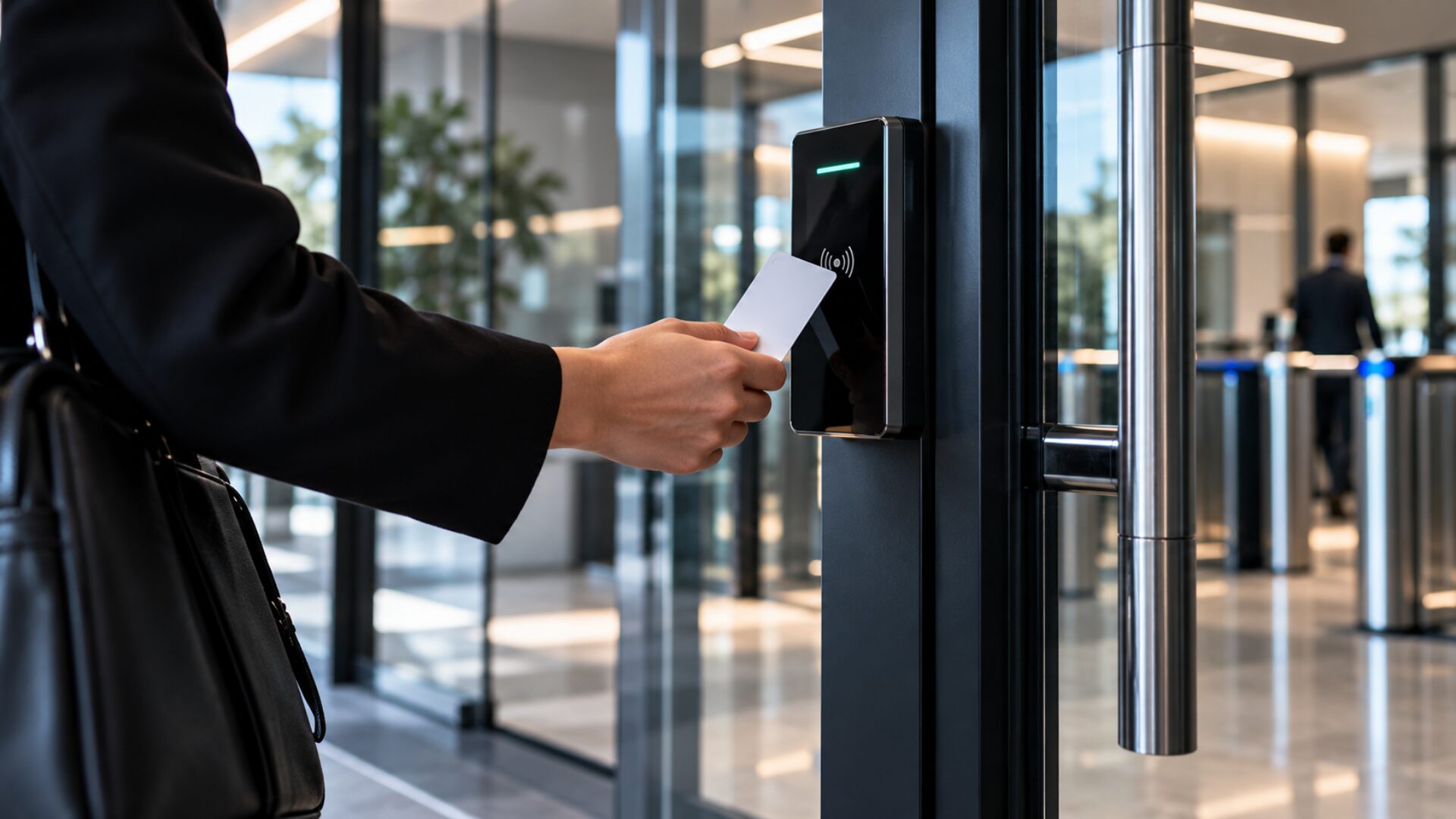
Beyond Opening a Door: How to Design Intelligent Access Control
Access control is often associated with a door, a reader, and a credential. However, in a business facility, controlling access means much more than deciding whether a door should open or remain closed. It involves defining who can enter, which areas they can access, at what times, and under what conditions.
The first step should be understanding how the organization operates and moves. An industrial facility does not have the same needs as a corporate building, distribution center, or residential development. Each operation has different flows of employees, vehicles, visitors, and service providers, and those movements should be considered as part of the design.
Identification is only one part of the process. Recognizing a person does not automatically mean that they are authorized to access every area. The system must be able to relate identity to the appropriate permissions and, when necessary, to time, location, or user-type restrictions.
Access profiles make it possible to establish different levels of authorization. An employee may require permanent access to certain areas, while a service provider may need temporary authorization. Similarly, a visitor may have limited access to specific areas for a defined period of time.
Vehicle access requires additional consideration. Industrial, logistics, and corporate facilities may have different types of vehicles and different reasons for entering the site. License plate identification, barriers, readers, and other mechanisms can become part of a strategy designed around the traffic flow of each facility.
Context also matters. An access event that is authorized during normal operating hours may require a different review if it occurs at an unexpected time. Therefore, the value of a system is not simply recording that an entry occurred, but providing information that helps interpret that event within the operational rules.
Integration with video surveillance can expand this capability. When an access record can be correlated with video or other events, it becomes possible to obtain a more complete view of what happened. This can facilitate incident reviews and provide security personnel with additional information.
The user experience should also be considered. An overly complicated system can create friction for authorized users, while insufficient controls can increase risk. The objective should be to find the right balance between security, operational efficiency, and ease of use.
Scalability is another factor worth considering from the beginning. An organization may increase its workforce, add new buildings, or modify the layout of its facilities. A flexible architecture makes it easier to incorporate new users, areas, and devices without having to redesign the entire solution.
A well-designed access control system does more than prevent unauthorized entry. It also helps establish clear rules for how people and vehicles move throughout a facility. That is why, before choosing a technology, it is worth answering a more important question: how should access work within this operation?
Leave a Reply