

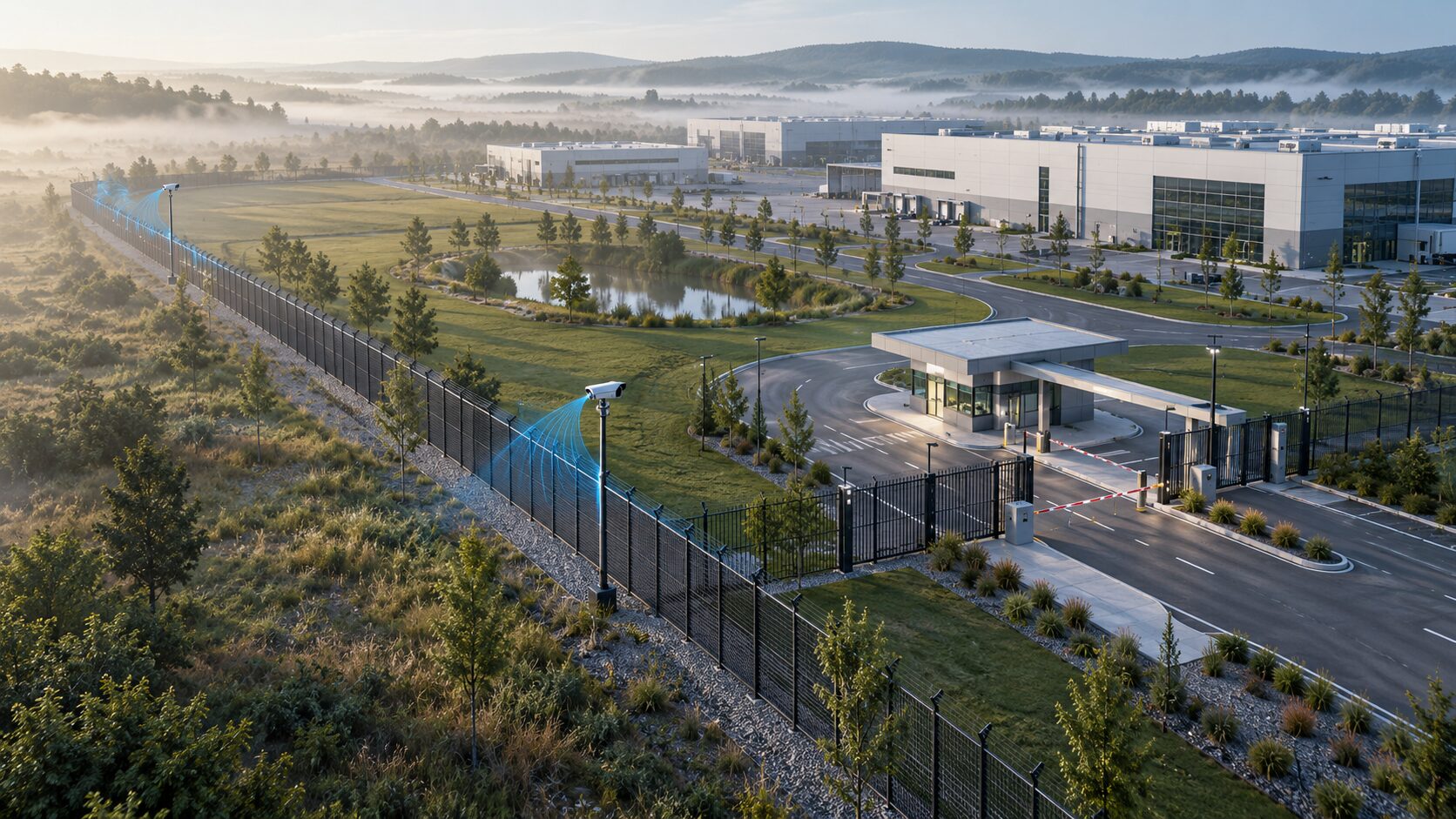
Perimeter Analytics: Insights to Anticipate Risks
The perimeter is one area an organization may consider when designing facility protection. Barriers, sensors, cameras, lighting, and procedures can serve different functions depending on the risk, location, and implemented design.
What information does a perimeter alert provide? At a minimum, it indicates that a system detected a defined condition in a particular area and at a particular time. The alert requires verification: on its own, it does not explain the cause or automatically confirm an intrusion.
To understand an event, review where it occurred, when it happened, and whether it has repeated. This information can guide an inspection or help compare the record with site operating conditions. Its usefulness depends on system accuracy and the data available.
The surrounding environment is also part of the assessment. Lighting, vegetation, construction, weather, and nearby activity may be relevant when reviewing the coverage and performance of certain devices. Sensors do not all react to the same conditions, so verification should account for the specifications of the installed equipment.
When alerts cluster along one section, a physical inspection can help determine whether there is a fault, an obstruction, or a condition requiring attention. The digital record indicates where to begin; a site visit helps confirm what is happening.
Technology is only one part of protection. CISA’s guidance for commercial real estate describes layered approaches that may combine physical measures, surveillance, access control, and procedures. It is a reference for considering measures according to risk, not a universal formula or requirement for every facility.
Integrating an alert with video or access control can provide additional information if the installed architecture supports it. Before doing so, define what information will be shared, who can access it, and how it will be protected. Integration does not, by itself, guarantee complete data or identify the cause of an event.
Responsible teams can establish criteria for classifying and handling alerts. For example, they can document who verifies each event, how an anomaly is reported, and when assistance is requested. Criteria should reflect the facility and its current procedures.
Periodic review of records may help identify recurring events and organize inspections. For analysis to be reliable, system clocks, locations, and records should be configured correctly, and observations should be confirmed in the field.
Perimeter protection requires an appropriate combination of design, technology, verification, and procedures. Reviewing alerts in context helps determine what to inspect; the response should be based on actual site conditions and the organization’s security plan.
Leave a Reply