

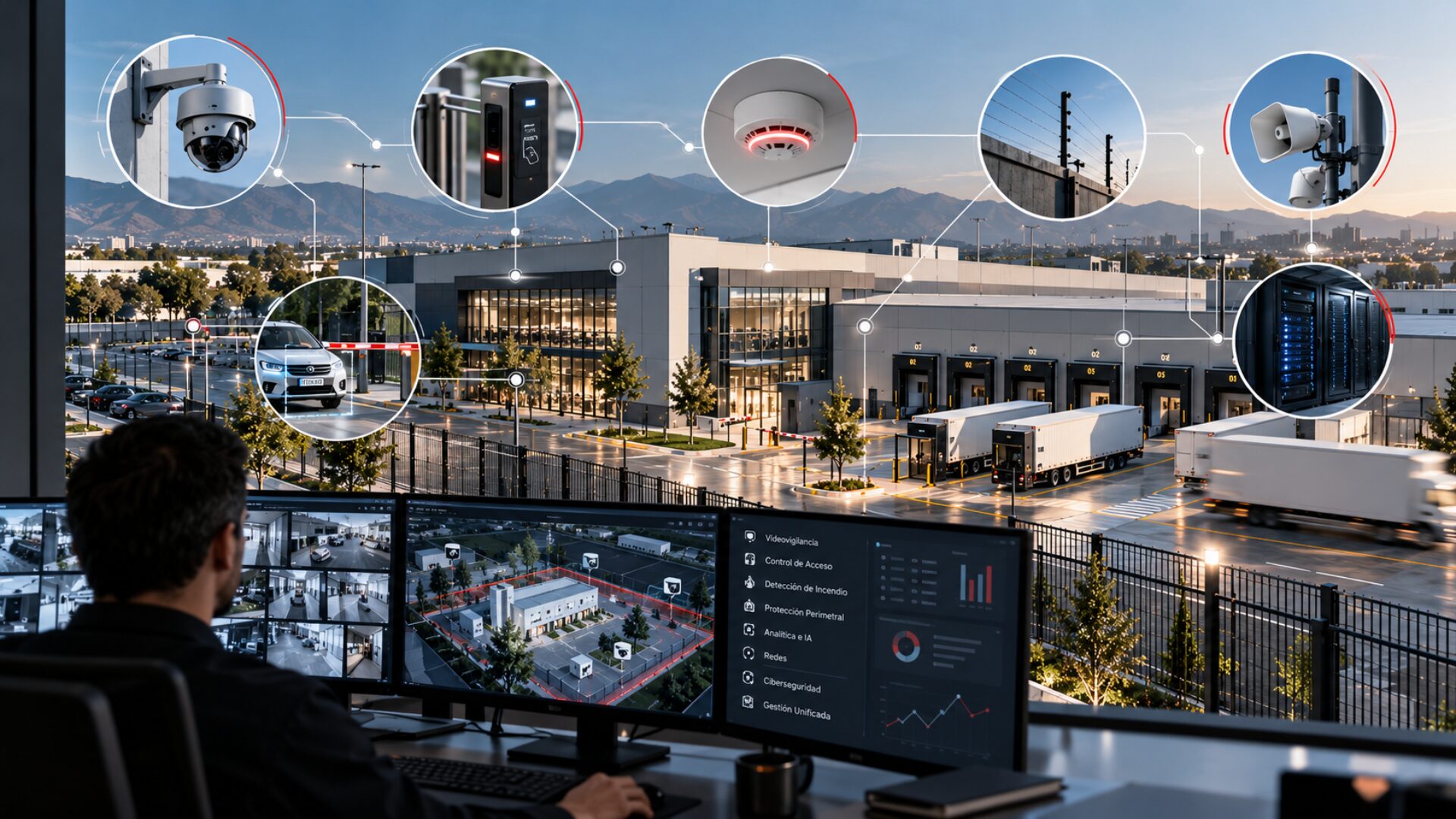
From Isolated Devices to an Integrated Security Ecosystem
A camera can show what is happening in an area. A reader can record who entered. An alarm can indicate that something requires attention. Each system generates different information, but when they operate in isolation, that information can remain fragmented.
For many organizations, the challenge is no longer simply adding more devices. It is also making different solutions work together in a coordinated way and provide a more complete view of what is happening within a facility.
Video surveillance is a good example. A camera may record a person entering an area, but the image alone may not explain why that person was there or whether the access was authorized. When that information can be correlated with an access record, the context changes.
The same applies to alarms. An alert may indicate that a door was opened, movement was detected, or another predefined condition occurred. Relating that signal to other events can help provide a better understanding of what was happening at that moment.
Integration does not simply mean connecting every device to one another. First, it is necessary to determine which information is useful, which systems need to exchange it, and how it should be used. A well-designed security architecture should have a clear operational purpose.
Communication infrastructure is an important part of this process. Systems need networks, links, and appropriate communication media to exchange information according to the characteristics of the facility. A properly sized architecture should also consider availability, capacity, and future growth.
Integration can also be particularly relevant for organizations operating across different buildings or locations. In these environments, certain functions may require centralized management, while others need to continue operating locally. The architecture must respond to the specific needs of each operation.
The amount of information generated should also be considered. Integrating systems can make more events available to operators, but more data does not necessarily lead to better decisions. It is important to define which situations require attention and how information should be presented so that it remains useful.
Video analytics and AI-based tools are expanding the possibilities of this model. Rather than relying entirely on personnel to continuously observe every camera feed, certain technologies can help identify predefined patterns or events. Their usefulness will depend on how they are integrated into the overall strategy.
The ultimate goal of integration should not be having more platforms or accumulating more information. It should be understanding what is happening more effectively and facilitating an appropriate response. When different information sources can be correlated, an isolated event can gain context that was previously unavailable.
This also changes how security is approached. Instead of analyzing each system as an independent tool, it is possible to design an architecture in which each system contributes a different piece of information. The result can be a more complete view of the operation and the events that require attention.
Integrated security, therefore, is not simply about having many systems operating at the same time. It is about defining how those systems should interact so that the information they generate has a clear purpose and can be used effectively within the operation.
Leave a Reply