

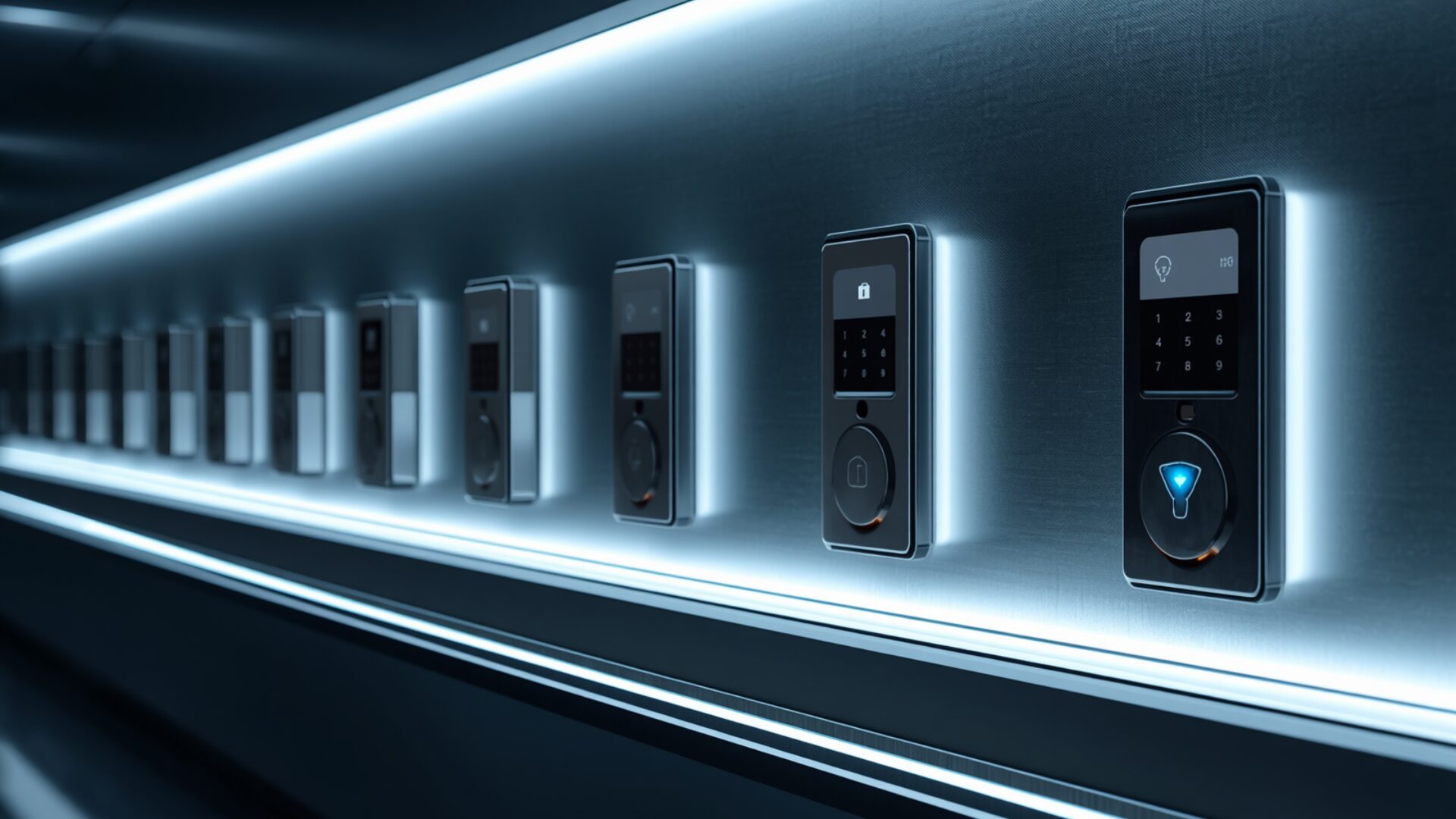
The Evolution of Electronic Locks and Intelligent Access
For decades, physical access to buildings, offices, and private spaces depended on essentially the same tools: metal keys, mechanical locks, and proximity cards. While these solutions are still widely used, the way people interact with spaces has changed dramatically. Today, intelligent access is no longer viewed solely as a security feature, but also as part of the operational and technological experience of a building.
One of the main drivers behind this evolution has been the growing need for greater control over who enters a facility, when they enter, and how long they remain inside. Physical keys present clear limitations in this regard. They can be lost, duplicated, or shared without any form of traceability. In many situations, losing a key means replacing entire locking systems to restore security.
Electronic locks transformed that model by enabling dynamic access management. Instead of relying exclusively on physical keys, organizations can now use digital credentials, biometrics, facial recognition, or even smartphones to grant access. This not only improves security, but also enhances operational control and visibility.
The adoption of mobile credentials has accelerated significantly in recent years. More companies and developers are looking to reduce dependence on physical cards and simplify the user experience. Using a smartphone as a credential allows administrators to manage permissions remotely, update access instantly, and eliminate much of the logistical complexity associated with traditional keys and badges.
Traceability is another major advantage of intelligent access systems. Every entry is automatically recorded, making it possible to monitor schedules, movement patterns, and activity within specific areas. This information is particularly valuable in corporate environments, multi-tenant buildings, industrial facilities, and large residential developments where multiple user profiles operate simultaneously.
In corporate environments, modern access platforms can also integrate directly with administrative and human resources systems. This enables organizations to automate processes such as onboarding, offboarding, and access permission updates without relying on constant manual adjustments. When an employee changes departments or leaves the company, permissions can be modified immediately through a centralized platform.
The residential sector has also embraced these technologies rapidly. In premium developments and multifamily properties, electronic locks offer greater convenience for both residents and administrators. The ability to generate temporary credentials for visitors, vendors, or service providers has become a valuable operational tool that improves both convenience and security.
The hospitality industry has experienced perhaps the most visible transformation. Many hotels now offer mobile access solutions that allow guests to enter their rooms without visiting reception desks or carrying physical keycards. Beyond the technological appeal, this shift reflects a growing expectation from users: faster, more seamless, and more automated experiences.
However, implementing intelligent access systems involves much more than replacing locks. Connectivity, cybersecurity, platform integration, and operational continuity must also be considered. As with any connected technology, digital protection becomes a critical part of the infrastructure. Poor configuration or unsecured remote access can create significant vulnerabilities.
Integration with other security systems is another important aspect. Modern access platforms can work alongside video surveillance, monitoring systems, building automation, and centralized management platforms. This creates coordinated responses, automated workflows, and greater visibility across the entire operation from a single environment.
As buildings become increasingly intelligent and interconnected, physical access will continue evolving toward more digital, flexible, and automated models. The trend points toward solutions that become less visible to users while becoming far more sophisticated in administration and control. In many cases, the ideal experience will be one where the technology operates almost invisibly in the background.
Physical keys are unlikely to disappear entirely anytime soon, but their role has already begun to change. Modern access solutions are no longer focused solely on opening doors. They are designed to provide security, traceability, operational efficiency, and a user experience aligned with the way people interact with technology and spaces today.
Leave a Reply