

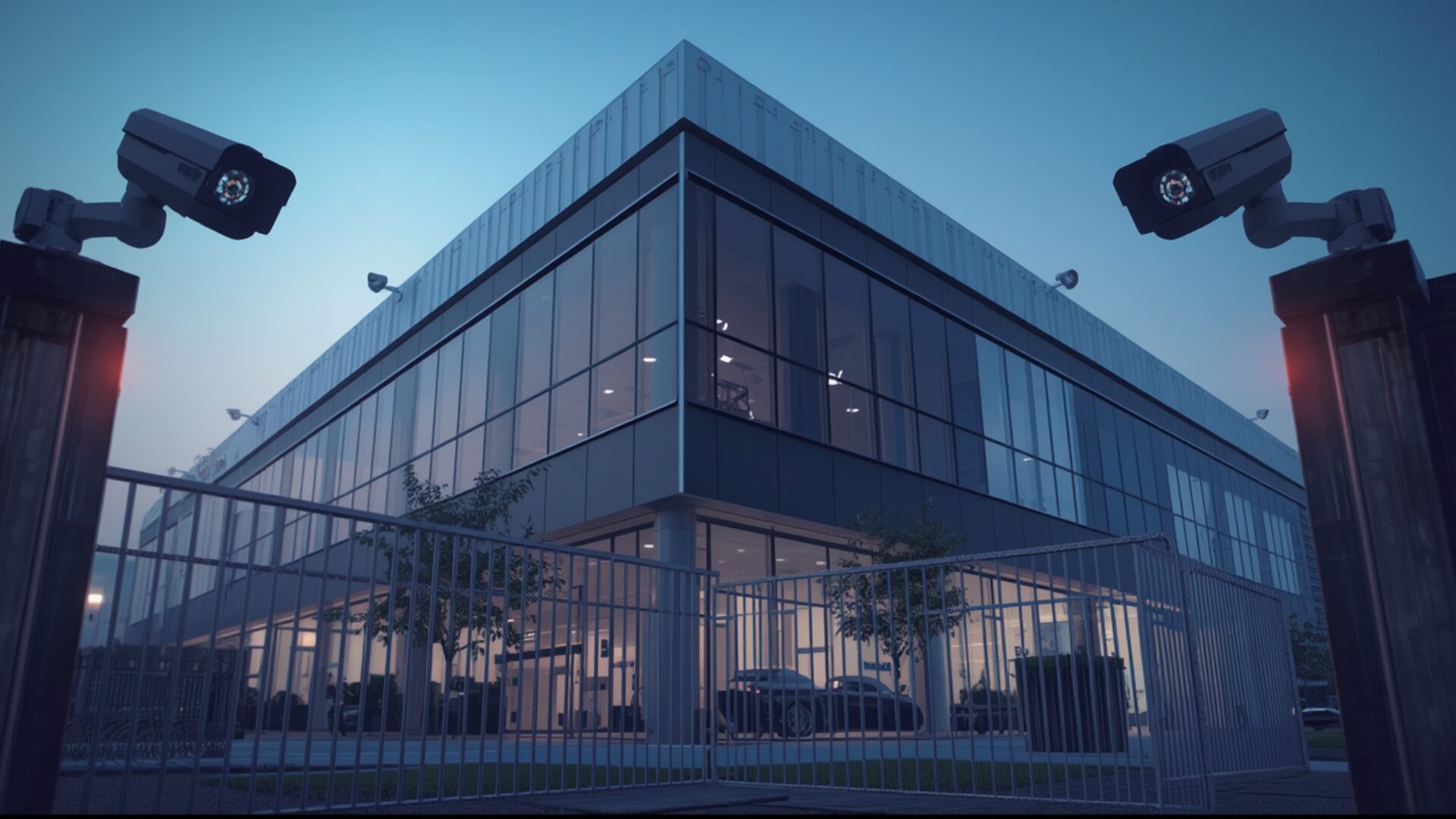
Modern Perimeter Security: Detecting Before Reacting
For many years, perimeter security was understood primarily as a physical barrier designed to prevent unauthorized access. Fences, walls, and security personnel were considered sufficient to protect industrial facilities, corporate campuses, and residential complexes. However, modern threats and the scale of today’s operations have fundamentally changed that approach. The goal is no longer simply stopping intrusions, but detecting them as early as possible.
In large-scale facilities, reacting only after someone has already entered the property is often too late. Response time becomes extremely limited, and the ability to contain a situation decreases significantly. For this reason, modern security strategies now focus heavily on the perimeter itself, transforming it from a passive boundary into an active early-detection zone.
Technological advancements have enabled the development of far more precise and automated systems for monitoring these areas. Today, solutions exist that can detect movement, analyze behavior, and generate automated alerts even before physical contact with a barrier occurs. This completely changes how prevention is managed in critical infrastructure environments.
Thermal cameras are among the most important technologies driving this evolution. Unlike traditional cameras, they can detect human presence and suspicious activity through temperature differences, even in total darkness or low-visibility conditions. This capability is especially valuable in industrial facilities, logistics centers, and large outdoor environments where nighttime monitoring has always been challenging.
Security radar systems have also become increasingly common in modern perimeter projects. These technologies can detect movement over long distances and cover significantly larger areas than conventional solutions. Additionally, they remain effective in difficult weather conditions where other technologies may lose reliability.
Another major advancement is the use of video analytics at the perimeter level. Through intelligent analysis algorithms, modern platforms can distinguish between irrelevant movement and potentially dangerous activity. This helps reduce false alarms caused by animals, weather conditions, vegetation, or environmental motion that historically overwhelmed monitoring centers.
Automation has also transformed response capabilities. Today, systems can automatically trigger actions whenever suspicious activity or an intrusion is detected. Lighting activation, PTZ camera tracking, alert generation, and access lockdowns can all occur instantly without relying entirely on human intervention.
In industrial and logistics environments, this preventive capability is especially valuable. Many facilities operate across extensive properties where manually supervising every area would be practically impossible. Technology makes it possible to expand coverage and maintain continuous surveillance without proportionally increasing operational workload for security personnel.
Integration between systems is another essential element of modern perimeter security. Cameras, sensors, radars, access control systems, and monitoring platforms rarely operate independently anymore. Instead, they work together to provide a more complete and coordinated understanding of what is happening across a property. This enables faster decision-making and greater situational awareness during incidents.
There is also a strategic component behind perimeter infrastructure. Not every facility requires the same level of protection or faces the same risks. Designing effective perimeter security involves understanding operations, environmental conditions, vulnerabilities, and the specific dynamics of each site. Technology alone cannot solve the problem without a well-designed strategy behind it.
Over the coming years, perimeter security will continue evolving toward increasingly intelligent and automated models. Artificial intelligence, more advanced sensors, and integrated platforms will continue reducing response times while improving predictive capabilities. The industry will become progressively more preventive and less reactive.
Today, protecting a facility means far more than monitoring gates or fences. It means detecting behavior, interpreting events, and acting before a threat reaches critical infrastructure. Modern security begins long before anyone reaches the front door.
Leave a Reply